

One of the biggest obstacles to lasting change is the way people define success.
Many people approach eating as a test that they either pass or fail.
One “bad” meal becomes evidence they’ve failed, which often leads to giving up entirely. This all-or-nothing thinking undermines consistency — the one thing that actually matters.
A more useful approach is to treat eating as an experiment.
When you frame your choices as experiments, the goal shifts from being perfect to learning what works. Instead of judging outcomes, you observe them.
For example:
A practical way to apply this:
This mindset keeps people engaged long enough for habits to form. It also reduces the emotional load around eating, which makes consistency far more likely.
Progress comes from making adjustments based on what you observe — not from rigid control or self-judgment.
—Keith
If you have questions or topics you’d like me to address in future emails, you can reply to this message. I read and respond personally to all replies.
Keith A. Herman is the founder of the Expert Diet Project, an initiative dedicated to correcting health misinformation by spotlighting the advice of the real experts.
The Eat Like an Expert Newsletter, the Health & Well-Being Journal, and Keith’s upcoming book, Eat Like an Expert, are all part of the Expert Diet Project. The book is scheduled for release in 2027.
Plus, you’ll receive 10 days of email support to walk you through your first week of healthier eating, one day at a time.
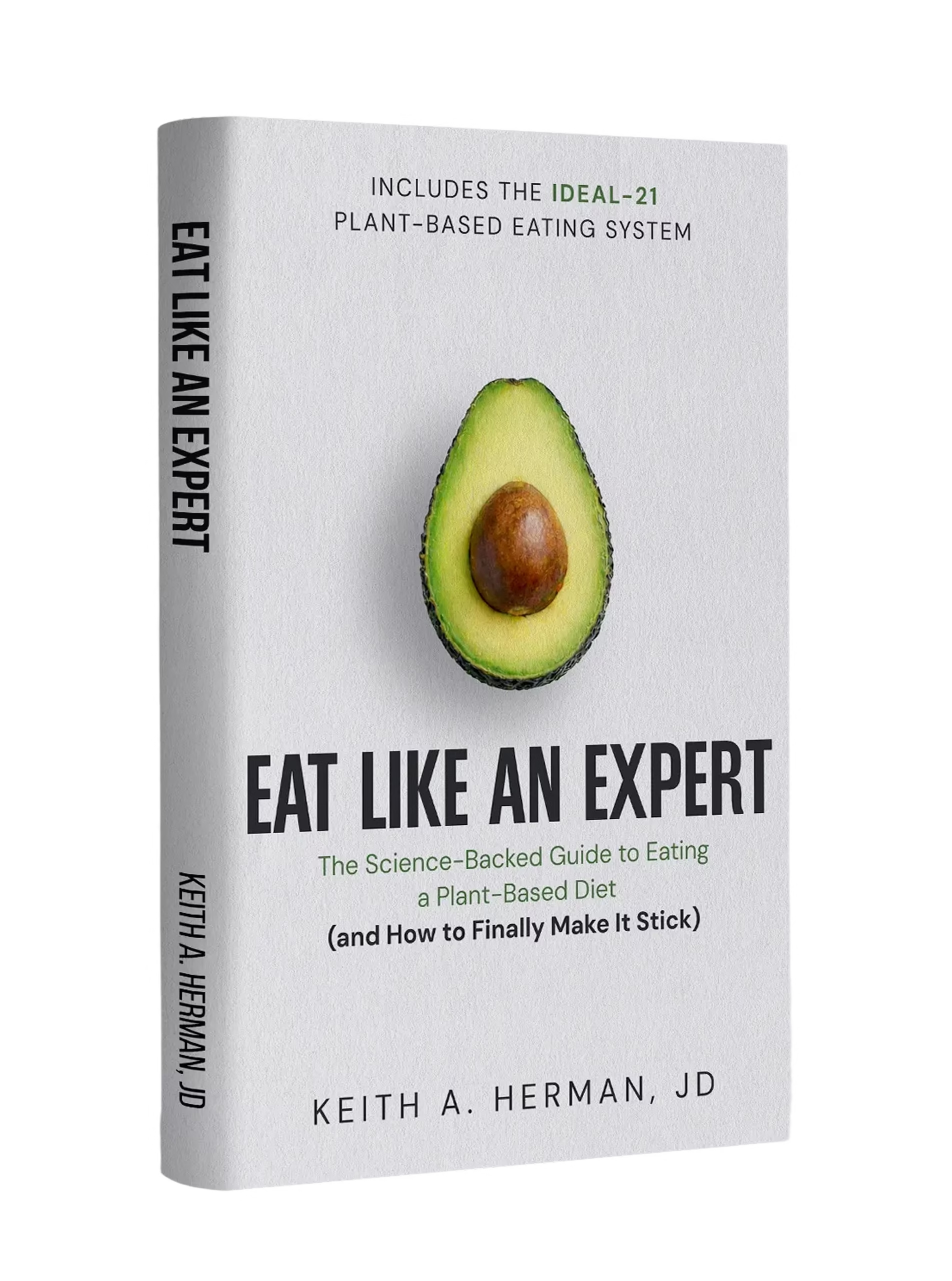
Subscribe to our newsletter to receive more information about my book and journal (and to download your FREE fillable daily habit tracker).
Here’s how the journal helps you turn insight into results:
13-Week Roadmap: A simple, day-by-day system that removes guesswork and keeps you focused.
Trigger-Proofing Tools: Learn how to redesign your environment so healthy choices feel easy.
Built-In Accountability: Track food, energy, sleep, and habits so progress never slips away.
Daily Reflection Prompts: Just 5 minutes a day to stay aligned before life gets busy.
This isn’t about fixing something that’s broken.
It’s about making healthy choices feel automatic.
This is your 13-week reset.
You’re not in crisis mode, and that’s a good thing.
The Health & Well-Being Journal isn’t just for getting back on track.
It’s for levelling up, staying consistent, and building a food relationship that lasts.
📘 Even 5 minutes a day can help you track, reflect, and grow, before life gets messy.
Ready to try it?
Start Your 13-Week Upgrade