

Two people set the same goal. Eat a salad every day.
One writes it down and moves on.
The other writes down that she will eat a salad she makes herself in her kitchen with kale, tomatoes, onions, avocado, and salmon at noon each weekday.
Same goal.
Very different odds of success.
The difference is called an implementation intention. It’s not just what you’ll do. It’s when, where, and how you’ll do it.
Vague plans fail because your brain doesn’t know when to act.
When noon arrives and you’re hungry, the path of least resistance wins. But if you’ve already decided what you’re making, where you’re making it, and exactly when, the decision is done. You just execute.
Here’s the formula:
I will [specific behavior] at [specific time] in [specific place].
Instead of “eat more fruit,” write “I will eat an apple at 3pm at my desk.” Instead of “eat fish twice a week,” write “I will cook salmon on Tuesday and Thursday evenings in my kitchen.”
The specificity removes friction. You’re not standing in front of the fridge wondering what’s for lunch. You’re not debating whether today is a fish day. The choices are already made.
Try this:
This week, take one eating goal you’ve been struggling with. Add the when, where, and how.
Write it down. Be as specific as the salad example.
Vague goals wait for motivation. Specific plans run on autopilot.
—Keith
If you have questions or topics you’d like me to address in future emails, you can reply to this message. I read and respond personally to all replies.
Keith A. Herman is the founder of the Expert Diet Project, an initiative dedicated to correcting health misinformation by spotlighting the advice of the real experts.
The Eat Like an Expert Newsletter, the Health & Well-Being Journal, and Keith’s upcoming book, Eat Like an Expert, are all part of the Expert Diet Project. The book is scheduled for release in 2027.
Plus, you’ll receive 10 days of email support to walk you through your first week of healthier eating, one day at a time.
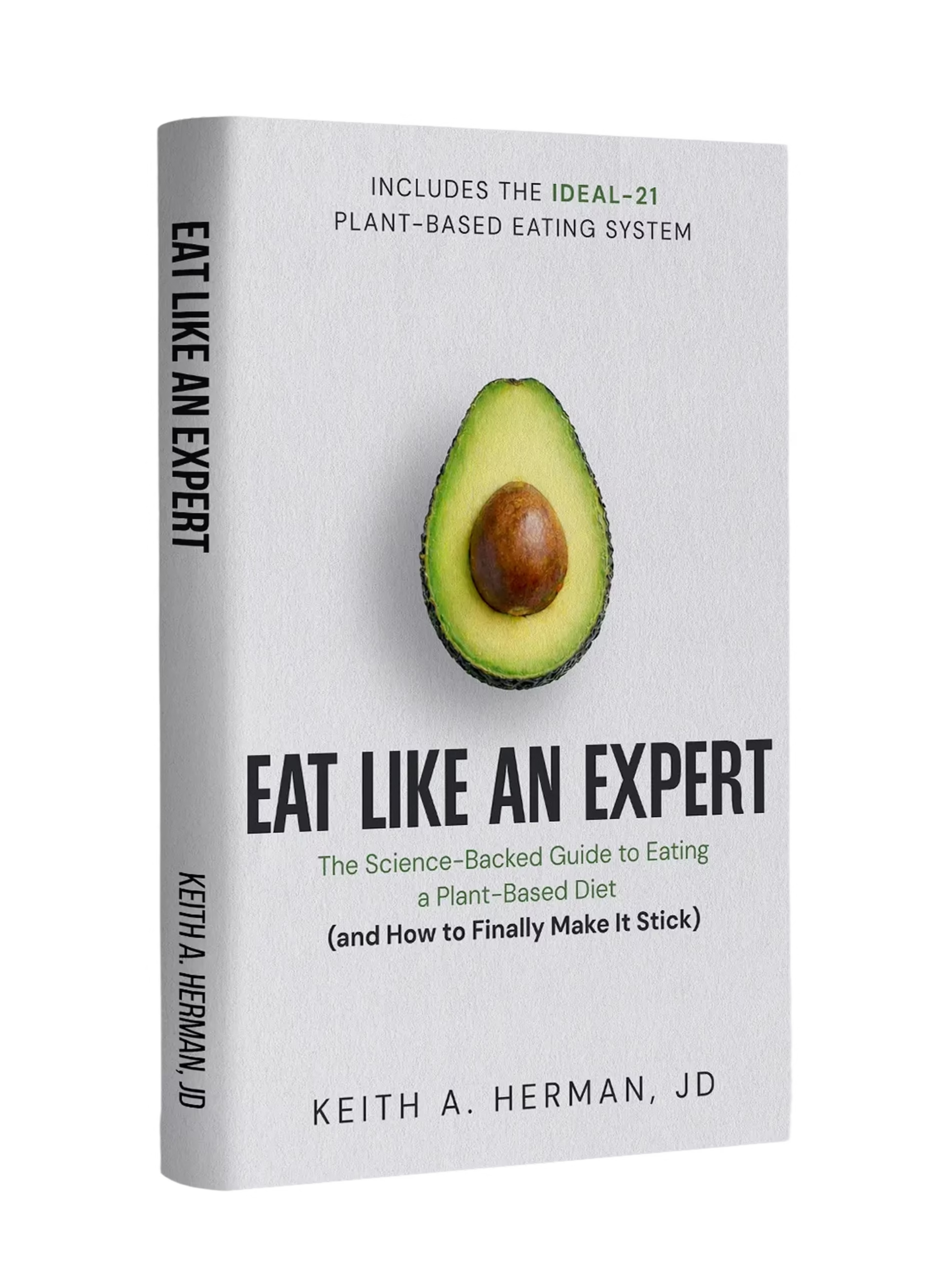
Subscribe to our newsletter to receive more information about my book and journal (and to download your FREE fillable daily habit tracker).
Here’s how the journal helps you turn insight into results:
13-Week Roadmap: A simple, day-by-day system that removes guesswork and keeps you focused.
Trigger-Proofing Tools: Learn how to redesign your environment so healthy choices feel easy.
Built-In Accountability: Track food, energy, sleep, and habits so progress never slips away.
Daily Reflection Prompts: Just 5 minutes a day to stay aligned before life gets busy.
This isn’t about fixing something that’s broken.
It’s about making healthy choices feel automatic.
This is your 13-week reset.
You’re not in crisis mode, and that’s a good thing.
The Health & Well-Being Journal isn’t just for getting back on track.
It’s for levelling up, staying consistent, and building a food relationship that lasts.
📘 Even 5 minutes a day can help you track, reflect, and grow, before life gets messy.
Ready to try it?
Start Your 13-Week Upgrade