For decades, we’ve been told to set SMART goals: Specific, Measurable, Achievable, Relevant, Time-bound.
SMART goals work well for projects and deadlines. But they weren’t designed for changing how you eat, and that’s why so many people keep failing at something they genuinely care about.
The problem isn’t you. It’s the goal system you were given.
SMART goals quietly assume the wrong things about behavior change:
- That deadlines create motivation
- That pressure produces results
- That willpower is the main lever
- That falling short means you didn’t try hard enough
That logic works when someone else controls the incentives. It fails when the goal is who you want to become.
Eating well isn’t a task to complete. It’s an identity to grow into.
A Better System
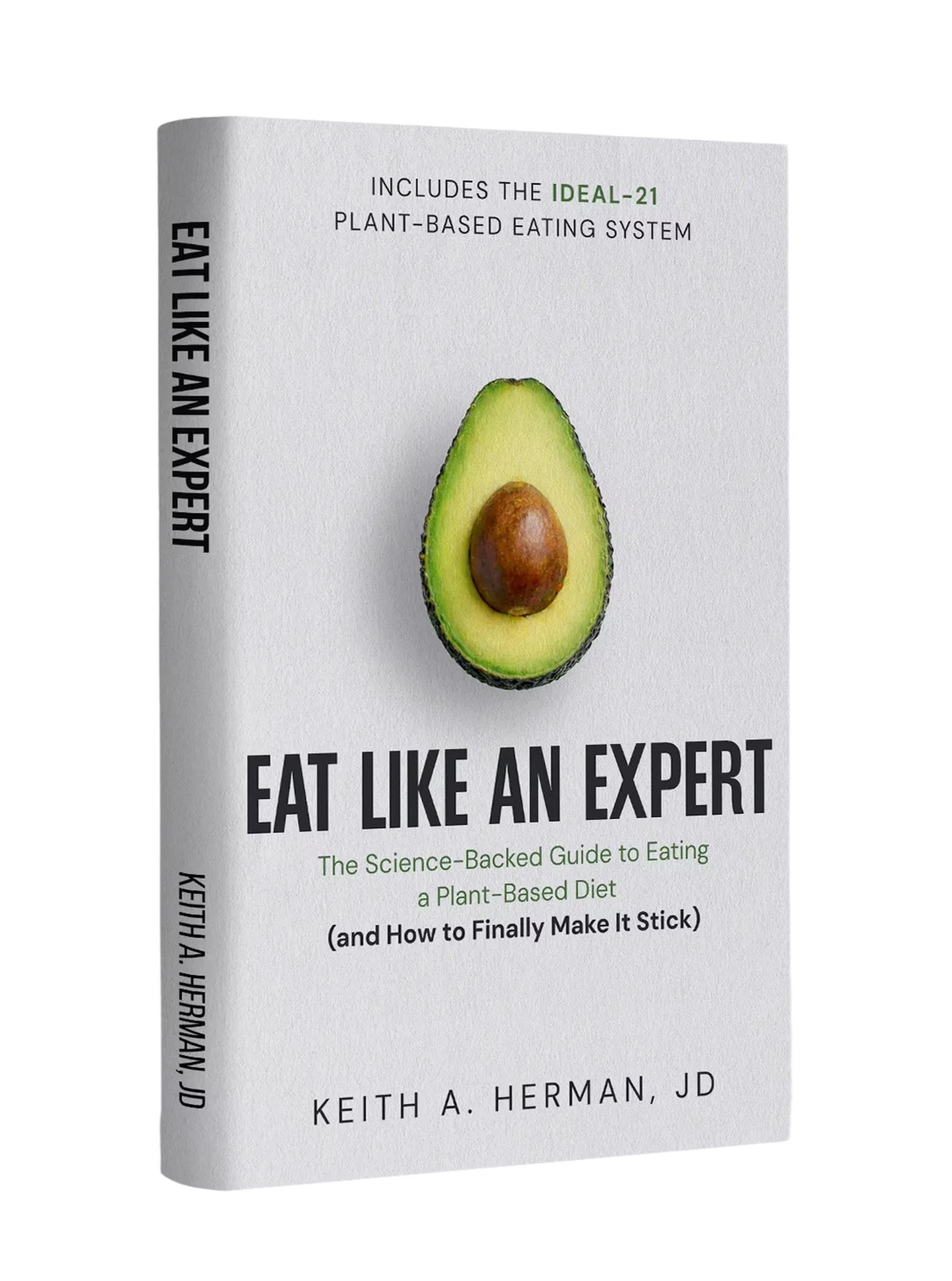
In Eat Like an Expert, SMART goals are replaced with IDEAL Goals—a system designed specifically for behavior change.
IDEAL stands for:
I — Identity-Based
Focus on who you want to become, not just outcomes like “lose weight.” Behavior follows identity.
D — Data-Driven
Anchor your goals to evidence-based benchmarks from leading health organizations. Then track your own data against these clear standards.
E — Environment-Focused
Design your environment so the right choice is the easiest choice. When the environment changes, behavior changes automatically.
A — Action-Ready
Break goals into right-sized actions paired with implementation intentions that define when and where they happen.
L — Leveraged
Use specific tools to do the heavy lifting, so progress doesn’t depend on self-discipline.
Why This Matters
SMART goals are fragile: miss the number or deadline, and the goal collapses into failure. They ignore the psychology of the person pursuing the goal.
IDEAL supercharges your goals with identity, environment, planned action steps, and leverage to make creating new habits easy.
SMART goals ask you to push harder.
IDEAL Goals help you stop fighting yourself.
You don’t need more discipline. You need a better operating system.
In upcoming emails, I’ll show you exactly how to use the IDEAL-Goals system:how to design your environment, choose the right habit change tools for your situation, create the right action steps, and plan for obstacles.
For now, just know: the problem isn’t you. It’s the system you’ve been using.