In my last blog I explained why low-carb diets are not a magical way to lose weight. Now I am going to discuss why low-fat diets are usually not effective in the long-term.
At first glance, it seems to make sense. You want less fat on your body, so you should eat less fat. But remember, the key to losing body fat is creating a calorie deficit (burning more calories than your body absorbs). You can create a calorie deficit by eating foods with less protein, fat, or carbs. The easiest way to create a calorie deficit without feeling hungry is to eat more fruit, vegetables, intact whole grains, and legumes.
But, replacing a certain amount of fat with an equal amount of protein or carbs could create a calorie deficit . . . if everything else you ate stayed the same. Fat has 9 calories per gram, protein has 4, carbohydrates have 4, and alcohol has 7. Let’s say you ate a burger with 14 grams of fat, 9 grams of carbs, and 19 grams of protein. That would be 238 calories (9 X 14, plus 4 X 9, plus 4 X 19). If you then ate an identical burger where 10 grams of fat was replaced with 10 grams of protein or carbs, the other burger would have 50 calories less. If that burger with less fat made you feel just as satisfied as the previous burger, then we are in business. You reduced your calories without feeling hungry.
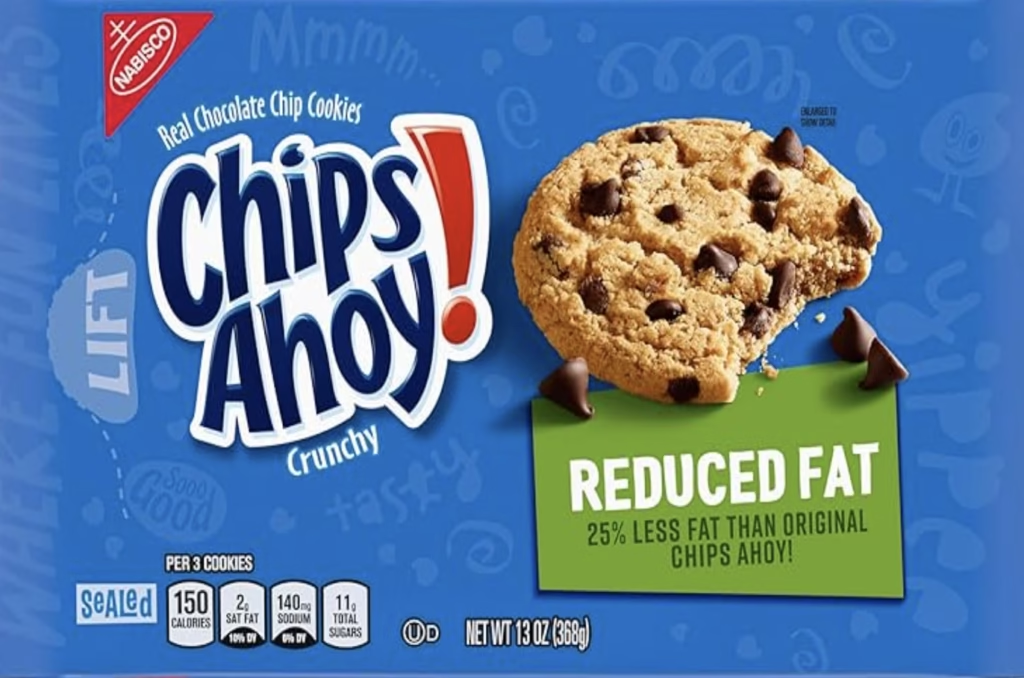
That was the theory behind why eating less fat could cause weight loss. But this isn’t what happens most of the time. For example, low-fat cookies often don’t have less calories than traditional cookies, because food manufacturers replace the fat with added sugar. We were tricked into thinking the important thing for weight loss is the amount of fat, when it is really the calories that matter. We started eating more low-fat junk foods that had the same, or more, calories than the normal fat versions. This is why many gained weight on this low-fat approach. But it wasn’t the “low-fatness” of the diet that was the problem, it was the total calorie intake.
Some groups advocate for a very low-fat diet with less than 10% of calories from fat. This is hard to do unless you are eating lots of fruits and vegetables, so it is more likely the water and fiber in the fruits and vegetables were to thank for the weight loss, not the percentage of fat in your diet. Eating very low-fat can also be difficult for many to sustain for several reasons.
First, it is difficult to track your fat calories, just like it is difficult to track carbs. You must be very mindful of the foods you choose. In a study called Predimed, the control group was asked to eat a low-fat diet. However, at the end of the study researchers analyzed what they actually ate. It turns out they only reduced their fat intake to 37%. This illustrates how difficult it can be to eat low-fat, even when you are under the spotlight of researchers. The Dietary Guidelines for Americans recommend fat intake be 20 – 35% of calories, so anything below 20% can be considered low-fat.
Second, for some people a diet with less than 10% of calories from fat can be less satisfying than a diet with 20% or more calories from fat. If the very low-fat diet doesn’t fill you up as much or make you feel as satisfied, then you may end up replacing those fat calories with calories from other foods. A healthy Mediterranean diet can often be around 40% of calories from fat and still create a calorie deficit.
My typical diet is about 30% of calories from fat, but I don’t track my fat or carbs because I don’t care what the numbers are. If my goal is to lose body fat, then I will start tracking my total calories and focus on high fiber whole plant foods.
The amount of fat is not important for health either. But the type of fat is very important. Eating foods low in saturated fat can reduce the risk of heart disease and type 2 diabetes, when those foods replace foods high in saturated fat (fatty cuts of meat, full fat milk/cheese/yogurt, and foods made with butter, coconut oil, palm kernel oil, and palm oil). Fruits, vegetables, legumes, and intact whole grains come out on top whether you are optimizing for weight loss or health benefits.
In my next blog, I address the misconceptions around intermittent fasting and time restricted eating.
Download my habit change cheat sheet for free.
Join over 10k subscribers
By submitting above, you agree to our privacy policy.

Keith Herman is a certified nutrition coach, personal trainer, and estate planning attorney. He is an elected Fellow of the American College of Trust and Estate Counsel, a former adjunct professor at Washington University in St. Louis School of Law, and winner of the Excellence in Writing Award from the American Bar Association.
Keith is the creator of the Health & Well-Being JournalTM, a daily accountability planner for optimizing your mind, body, and spirit, and tracking healthy behaviors.
He is also the author of Eat Like an Expert: How to Start Eating Healthy (and Stick to It), which combines the best of plant-based, Mediterranean, low-carb, and anti-inflammatory diets to create a customizable plan that delivers transformational results.
You can find more information about Keith at KeithAHerman.com

There are many forms of intermittent fasting. There is the 5:2 diet where you...